
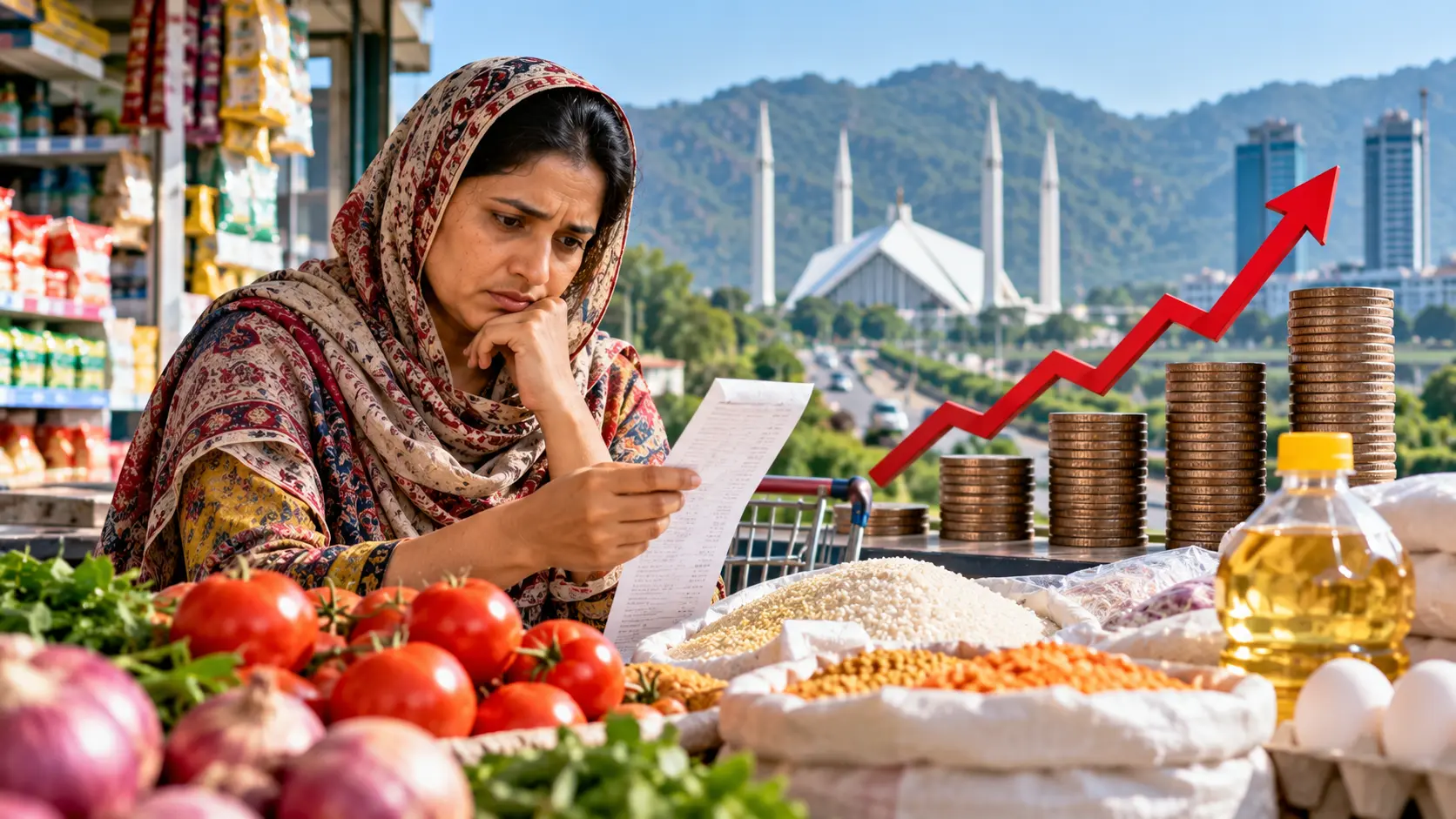
Pakistan’s inflation rate has started to ease again, but millions of households are still wondering why their monthly expenses remain so high.
According to the Pakistan Bureau of Statistics (PBS), Consumer Price Index inflation slowed to 10.3% in September 2026, compared with 11.1% in August. However, inflation was only 5.8% in September last year.
So, if inflation is falling, why are people not seeing cheaper prices?
Lower Inflation Does Not Mean Lower Prices
The answer is simple: lower inflation means prices are increasing at a slower rate. It does not mean prices have returned to their old levels.
In fact, overall consumer prices still increased 1.3% in September compared with August.
Families are also carrying the impact of price increases from previous years. For example, the national average price of a 20kg wheat flour bag increased from around Rs1,835 in October 2024 to Rs2,697 in October 2026, according to a comparison based on PBS data.
Fuel and Electricity Keep Household Costs High
Energy remains one of the biggest pressures on consumers.
In September, electricity charges increased 15.28% month-on-month, while motor fuel prices rose by more than 11%. Overall transport costs were 27.43% higher than a year earlier.
Higher fuel and electricity costs can also affect the prices of other goods because businesses pay more for transport, production and storage.
Food prices remain mixed. Some items became cheaper in September, including tomatoes, chicken, eggs and sugar. However, onions jumped 39.38% in just one month, while wheat flour also became more expensive.
Rural Families Still Face Higher Inflation
The latest PBS figures show urban inflation at 10.1%, while rural inflation stood slightly higher at 10.5% in September.
Average national inflation during the first three months of FY2026-27 was 10.2%.
For ordinary Pakistanis, this explains the gap between official inflation numbers and everyday experience. Inflation may be slowing, but prices of many essentials are already much higher than they were two years ago.
Until food, energy and transport costs stabilise for a longer period, households may continue to feel financial pressure even when the headline inflation rate moves down.
