
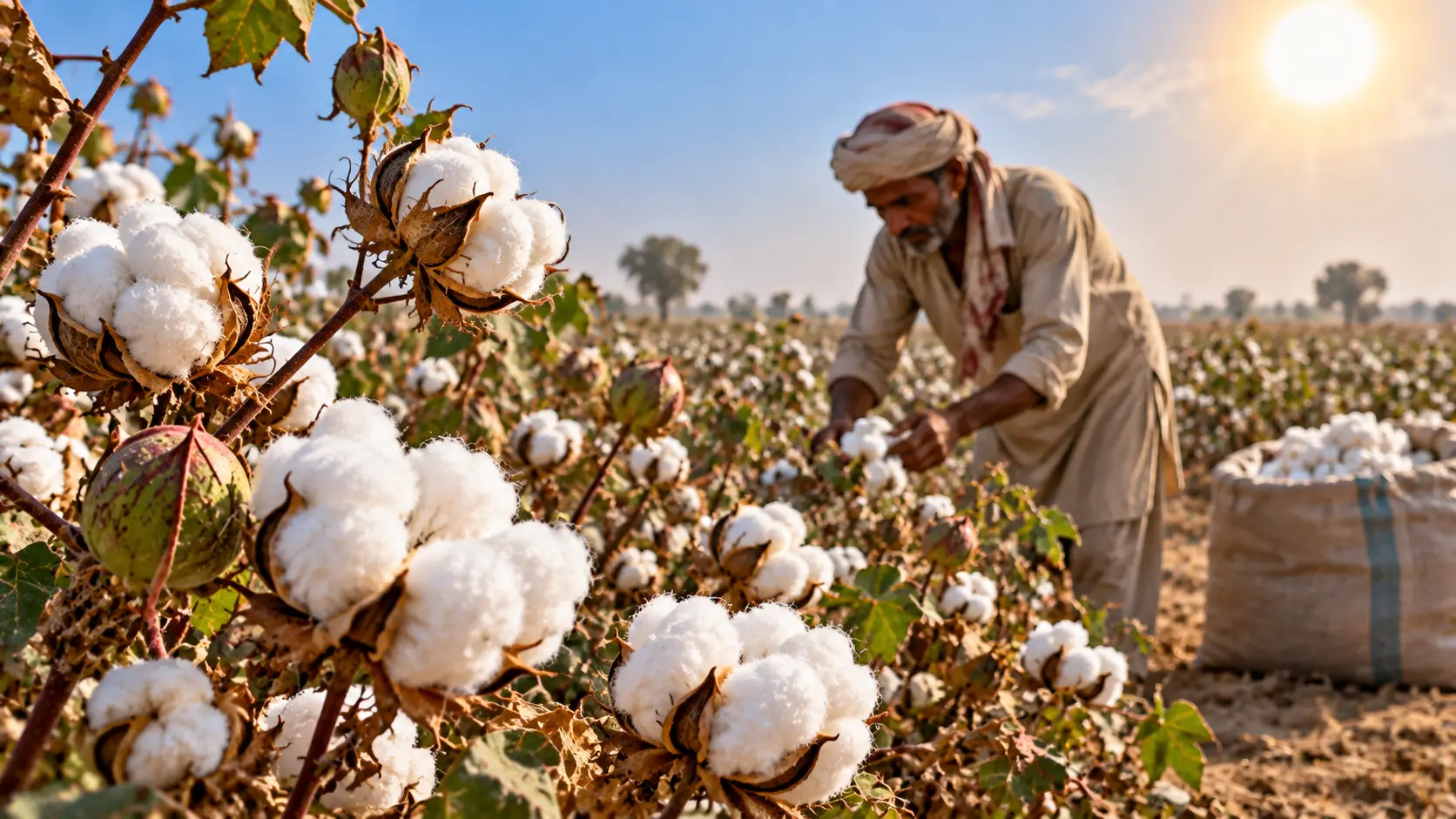
Pakistan’s cotton crop has lost some of its early momentum as unusually high temperatures hit fields during a key stage of the season.
Latest data from the Pakistan Cotton Ginners Association (PCGA) shows that cotton arrivals reached 3.208 million bales by September 30, 2026, up 5.39% from 3.044 million bales during the same period last year.
The increase is positive, but the pace has slowed sharply. About a month earlier, cotton arrivals were running around 27% ahead of last year, raising hopes for a much stronger harvest.
Heatwave Hurts Cotton Outlook
Industry officials say unusually high temperatures caused cotton bolls to open earlier than expected. At first, this created the impression of stronger yields, but arrivals later slowed.
Between September 16 and 30, ginners received around 820,000 bales, well below the expected 1.1 million bales. The fortnightly flow was also about 21% lower than the same period last year.
Punjab recorded 1.215 million bales by September 30, showing year-on-year growth of 6.91%. Sindh reached about 1.993 million bales, up 4.48%.
Pink Bollworm Adds Another Risk
Weather is not the only concern. Agriculture experts have warned that pink bollworm has appeared in cotton-growing areas of Punjab and Sindh.
Lint contamination during picking is another challenge that could reduce cotton quality and hurt prices received by farmers.
Current field estimates suggest Pakistan’s crop could reach around 5.7 million bales, but this is not a final official production forecast. October weather, pest attacks, picking conditions and crop quality could still change the final number.
The slowdown is important for Pakistan’s textile industry, which depends heavily on cotton as a key raw material. If domestic production falls short, textile mills may need to rely more on imported cotton.
The next few weeks will therefore be critical in determining whether Pakistan can maintain its current gains or see the cotton outlook weaken further.
